Houston Truck Accident Lawyer: Free Statutory Analysis & Legal Guidance Tool

The Houston Truck Accident Lawyer statutory analysis tool for commercial wrecks on I-45, I-10, Loop 610, Beltway 8, and major port and freight corridors. Get instant statutory insights on liability and evidence preservation mapped to the Texas Transportation Code, Texas Health and Safety Code, FMCSA regulations, and Texas Civil Practice & Remedies Code. Designed for Houston victims and legal teams, describe your accident below for an immediate lawsuit roadmap under the Texas Rules of Civil Procedure. Read More

Houston Truck Wreck Legal Assistant Tool - TX

Hello. I am your Houston Truck Accident Legal Assistant. Describe your commercial vehicle collision, and I will analyze relevant Texas statutes and FMCSA regulations.

Loading...

Consulting Texas Statutes...

What Our Houston Truck Wreck Lawyer Tool Does?

Our Houston Truck Accident Legal Assistant Tool is designed to assist individuals involved in commercial vehicle (semi-truck, 18 wheeler) accidents and their legal representatives by providing instant statutory analysis based on the Texas Transportation Code and FMCSA regulations.

Whether your accident occurred on I-10, I-610, I-45, or other major freight corridors in Houston. This legal tool guides you through the critical steps to protect your rights and build a strong claim.

This single, cohesive tool is built to help crash victims, families, and professionals navigate complex commercial vehicle claims in Houston using:

  • Texas Civil Practice & Remedies Code (CPRC) and Texas Rules of Civil Procedure (TRCP).
  • Texas Transportation Code and permitting rules.
  • Texas Health & Safety Code (medical, hospital liens).
  • FMCSA regulations (49 CFR Parts 382–399).
Chat With Our Legal Assistant tool

Feature 1: Statutory RAG Engine

Our truck accident statutory tool reads your facts and maps them to Texas and FMCSA rules in seconds.

Feature 2: Evidence Preservation

This truck wreck legal analysis tool guides you about essential evidence preservation such as ELD, dashcam, and black box holds.

Feature 3: Actionable Next Steps

The tool guides you and your legal team on how Texas statutes apply to your specific claim.

How Houston Truck Wreck Statutory Analysis Tool Works?

This Houston truck accident legal assistant tool operates using a retrieval-based AI system. It first pulls applicable Texas laws and federal trucking regulations, then evaluates them to generate guidance tailored to your specific situation. Each response includes references to the relevant statutes. We continuously refresh our data sources to ensure alignment with the latest Texas and federal trucking regulations.

1

Scans User Query for key facts (e.g., "brakes failed on I-35")

2

Cross-references 49 CFR for violations & Texas Code for liability.

3

Outputs strategy with direct citations (e.g., "Violation of §396.3").

Start Your Free Case Review

Difference Between Traditional Legal Research and Using this Tool

Traditional legal research can be time-consuming and may miss critical statutes. Our tool provides instant, comprehensive analysis tailored to your specific truck accident scenario.

Traditional Legal Research

  • Time-Consuming: Can take hours to days to find relevant statutes and case law.
  • Fragmented: Requires searching multiple databases and sources.
  • Risk of Missing Key Laws: May overlook critical regulations or recent updates.
  • No Tailoring: Provides general information, not specific to your case facts.

Our AI-Powered Tool

  • Instant Results: Provides immediate analysis of your case facts.
  • Comprehensive: Cross-references federal and state regulations by key facts in your query.
  • Citation-Based: Outputs direct citations to relevant laws and regulations.
  • Tailored: Customizes results to your specific accident scenario, providing actionable insights.

Houston’s Freight Corridors and Risk Landscape

Houston’s truck traffic clusters around major interstates, port corridors, and industrial zones.

Interstates & Loops

I-10 (Katy/East), I-45 (North/Gulf), I-69/US-59 (Southwest/Eastex), US-290, I-610, Beltway 8/Sam Houston Tollway.

State Highways

SH 288, SH 225 (Port corridor), SH 146 (Bayport/La Porte), Hardy Toll Road, SH 249, SH 99/Grand Parkway.

Freight Zones

Port of Houston terminals, east-side petrochemical complexes, west/northwest logistics hubs, intermodal yards near 610/Beltway.

High-Risk Features

Complex interchanges, port drayage queues, work zones, high-speed merges, overweight/oversize corridors.

Houston Truck Accident Snapshot

Harris County has more commercial truck crashes than any other county in Texas due to:

  • Heavy mix of interstate, port, and industrial freight traffic.
  • Common driver issues such as speeding, distraction, fatigue (HOS).
  • Frequent maintenance problems such as brakes, tires, lights.
  • Load issues such as poor securement and overweight loads.
  • Work zones and busy intersections increase risk.

Data Sources

TxDOT CRIS dashboards and H-GAC crash data.

Why Truck Accidents Occur in Houston?

Driver Factors

  • Fatigue: Managing rest and hours-of-service (49 CFR §395).
  • Focus: Avoiding distractions and obeying speed limits.
  • Sobriety: Never driving while impaired.
  • Training: Proper licensing and skill standards (49 CFR §383).

Vehicle & Load

  • Maintenance: Regular inspections and repairs (49 CFR §392–396).
  • Equipment: Functional brakes, tires, and lighting (49 CFR §393).
  • Cargo: Ensuring loads are secure and within weight limits.

Environment

  • Road Conditions: Navigating port queues and traffic congestion.
  • External: Handling poor weather, visibility, and work zones.
  • Geometry: Managing narrow lanes and difficult turns.

Systemic Factors

  • Culture: Reducing dispatch pressure on drivers.
  • Oversight: Fixing gaps in safety monitoring.
  • Records: Maintaining strong documentation and data retention.

What To Do After a Truck Accident?

1. Health & Safety First

Call 911 immediately. Let paramedics check you for injuries, even if you feel fine, and keep copies of every medical bill and doctor's note.

2. Collect Information

Take photos of the damage and any warning signs on the truck. Write down the "DOT" and "MC" numbers on the truck door and get the police report number.

3. Protect Your Rights

Don't give a recorded statement to the truck's insurance company. We must quickly send a legal notice to stop the company from deleting their "Black Box" data and driver logs.

4. Insurance & Deadlines

Tell your insurance company what happened. In Texas, you generally have 2 years to take legal action.

How this legal Analysis Tool Helps?

This legal assistant tool helps you navigate complex trucking laws and ensures you don't miss critical steps in your claim.

  • Liability Review: Evaluates your crash details against Texas and federal trucking laws to highlight potential responsibility factors.
  • Evidence Overview: Identifies key categories of information—such as ELD data and electronic control module records—that may be important to preserve.
  • Deadline Awareness: Helps you understand common Texas filing time limits and procedural considerations.
  • Claim Organization: Assists you in organizing medical expenses, lost wages, and related damages for informed discussions.
  • Regulatory Context: Reviews potential regulatory issues such as hours-of-service limits, maintenance compliance, and cargo securement standards.
  • Attorney Preparation Support: Provides structured checklists to help you prepare before consulting a qualified Houston truck accident attorney.

Who May Be Legally Responsible?

In many Houston truck accidents, liability may extend beyond the driver. Commercial vehicle crashes often involve multiple entities depending on hiring practices, cargo handling, and vehicle maintenance.

  • The Motor Carrier (Trucking Company): Potentially responsible for negligent hiring, inadequate training, supervision failures, or pressure related to hours-of-service compliance.
  • Cargo Loaders or Shippers: Liability may arise if improperly secured or overloaded freight contributed to loss of control or rollover events.
  • Maintenance Providers or Manufacturers: Mechanical failures involving brakes, tires, steering systems, or defective components may introduce additional responsibility.

Key Categories of Evidence

Commercial carriers often deploy investigation teams quickly after a serious crash. Certain digital and maintenance records may become important when evaluating a claim.

Event Data Recorder (EDR)

Captures speed, throttle position, braking input, and impact data.

Electronic Logging Device (ELD)

Documents driver hours-of-service and rest compliance.

Driver Qualification File

Includes licensing history, safety record, and required certifications.

Inspection & Maintenance Records

Shows whether the vehicle met federal and Texas safety standards.

Common Procedure for a Truck Lawsuit in Houston

1. Investigation

This phase involves comprehensive identification of all potentially liable parties including the truck driver, trucking company, cargo loaders, maintenance contractors, and equipment manufacturers. Critical digital evidence is collected such as Electronic Control Module (ECM) data from the truck's "Black Box," Electronic Logging Device (ELD) records showing driver hours of service, GPS tracking data, dashcam footage, and driver qualification files. Witness statements, police reports, and scene photographs are secured to establish a complete timeline of events leading to the crash.

2. The "Demand"

This phase acts as a legal narrative, combining the medical records, billing summaries, and digital evidence secured during the investigation to prove clear liability and damages. A critical component of this stage is the "Stowers Demand," a powerful legal tactic unique to Texas law that offers to settle the case for the insurance policy limits. If refused to settle, they may become responsible for the entire jury verdict, even if it exceeds the policy’s maximum coverage. This effectively creates intense financial pressure on the insurance company to pay the full limit rather than risking a much larger judgment at trial.

3. Filing the Lawsuit

This phase marks the official commencement of litigation by filing an "Original Petition". This document serves as the primary legal notification to all responsible parties, including the truck driver, the motor carrier, and potentially the cargo brokers or equipment manufacturers, that they are being sued for damages. Once filed, the lawsuit triggers the "Discovery" process, a court mandated period where both sides are legally required to exchange internal emails, maintenance logs, and personnel records that were previously unavailable.

4. Evidence Exchange (Discovery)

This phase is a critical pre-trial stage where both sides are legally obligated to exchange all relevant evidence. This includes internal communications, driver logs, maintenance records, and safety audits from the trucking company. Depositions of key witnesses (specifically TRCP 199.2), including the truck driver, company safety officers, and expert witnesses, are conducted to gather sworn testimony. This comprehensive evidence exchange aims to uncover the full scope of liability and damages, setting the stage for potential settlement discussions or trial preparation.

5. Negotiation & Mediation

In this phase, parties engage in intensive negotiations to find a mutually agreeable settlement. During this process, the evidence gathered from TxDOT CRIS and H-GAC data is leveraged to establish the high-risk nature of the incident and the defendant's liability. Mediation provides a confidential environment where legal risks, medical outcomes, and the "Stowers" pressure are evaluated by both sides to determine a fair market value for the claim. This stage is designed to provide a faster, more certain resolution than a trial, allowing the injured party to secure compensation without the unpredictability and extended timeline of a court verdict.

6. Trial & Verdict

Central to this process is the application of "Proportionate Responsibility" under Chapter 33 of the Texas Civil Practice and Remedies Code (CPRC), which requires the jury to assign a specific percentage of fault to every party involved in the incident. The jury evaluates the totality of the evidence, including expert testimony, crash data, and safety violations, to determine the appropriate compensation for medical bills, lost wages, and pain and suffering. This stage transforms the raw data and legal arguments into a legally binding verdict, holding defendants publicly accountable for their actions.

Texas Trucking Laws & Statutes 2026 Updates

2-Year Statute

Generally, you have two years from the crash date to file a personal injury lawsuit in Texas.

51% Bar Rule

You can recover damages if your fault is 50% or less. If you are 51% or more at fault, you recover nothing.

180-Day Notice

Claims against government vehicles (TxDOT, City) require a formal notice within 6 months.

Understand the Legal Factors That Impact Your Claim

Our truck wreck legal tool identifies complex legal issues specific to Texas trucking laws that may impact your potential claim.

Comparative Fault (CPRC Ch. 33)

In Texas, you can't recover money if you are more than 50% at fault (i.e., 51% or more). Your final payout is reduced by your share of blame.

Exemplary Damages (CPRC Ch. 41)

If the company was "grossly negligent" (extremely reckless), a jury can award extra money as punishment, though laws limit the total amount.

Government Claims (TTCA)

If a city or TxDOT vehicle was involved, strict notice deadlines may apply under the Texas Tort Claims Act.

Dram Shop Liability

If the driver was drunk, it may be important to evaluate whether a bar or restaurant unlawfully overserved the driver.

Product Liability

An investigation may examine whether defective parts—like tires, brakes, or steering—actually caused the crash rather than just driver error.

Broker & Shipper Liability

Look beyond the driver to see if the company that hired the truck was negligent in selecting an unsafe carrier.

Vicarious Liability

Under "Respondeat Superior," an employer is legally responsible for their driver’s actions while they are on the clock.

Oversize/Overweight Permits

Massive loads require special TxDOT permits, escorts, and specific routes; failing to have these is a major violation.

Port & Drayage Specifics

Crashes near Highway 225 or 146 often involve specific port rules, TWIC card requirements, and long gate-queue delays.

Start Your Free Case Review

Share key crash details to receive a structured legal overview tailored to your situation.

  • Crash date, time & location/corridor.
  • Vehicles & cargo involved.
  • Injuries and treatment timeline.
  • Employer/carrier (DOT/MC) details.
  • Insurance information.
Launch the Legal Assistant

I-10: Houston’s Deadliest Highway for 18-Wheeler Wrecks

The "Katy Freeway" segment of I-10 is the widest in the U.S. and one of its most accident-prone.

In 2024, Houston recorded a staggering 34,500 car crashes, and a disproportionate number of these occurred on the I-10 corridor. As a primary transcontinental route, I-10 serves as the main artery for Port Houston freight, creating a perfect storm of high-speed passenger traffic and 80,000-pound commercial rigs.

2025 Risk Alert: Houston Avenue Bridge

As of May 2025, the Houston Avenue Bridge over I-10 remains a high-risk zone for oversize load strikes. These accidents often cause catastrophic multi-lane shutdowns and secondary rear-end collisions. If your accident involved an overhead strike or bridge debris, specific statutory rules regarding vertical clearance and routing permits apply.

I-10 Hotspots & Hazards

  • The Katy Freeway Split (I-610/I-10)

    Complex merges and "weaving" traffic cause hundreds of sideswipe truck accidents annually.

    High Frequency
  • Construction Zones (Ongoing thru 2029)

    The $407M I-10 elevation project creates narrow lanes and shifting bottlenecks near downtown.

    Active Hazard
  • East Freeway Industrial Corridor

    Heavy hazmat and port traffic near Channelview leads to a higher rate of jackknife incidents.

    Industrial Zone

3,500+

Commercial Wrecks on I-10

Since 2017, I-10 has been the #1 highway for commercial vehicle crashes in Harris County.

72%

Passenger Vehicle Fatality Rate

In collisions between trucks and cars on I-10, the occupants of the car suffer 72% of the deaths.

I-10 & Beltway 8

Deadliest Interchange

The Spring Branch interchange has seen over 100 commercial wrecks in the last 5 years alone.

Port of Houston & 610 East Loop: The Industrial "Kill Zone"

With 12 truck accidents occurring daily in Houston, the East Loop is the epicenter of catastrophic industrial wrecks.

The Port of Houston is the busiest port in the U.S. by waterborne tonnage. This creates an unparalleled concentration of intermodal drayage trucks, chemical tankers, and heavy-haul rigs on the I-610 East Loop. Unlike typical highway accidents, crashes here often involve "loose material" spills or hazardous chemicals, triggering complex state and federal regulations.

Intermodal Liability

Accidents involving chassis-mounted containers require navigating the Uniform Intermodal Interchange Agreement (UIIA) to determine if the ocean carrier or the trucking company is liable.

Hazmat Violations

This truck wreck tool investigates violations of 49 CFR Part 397, which governs the specific routing and parking of trucks carrying flammable or toxic loads through Houston's densely populated corridors.
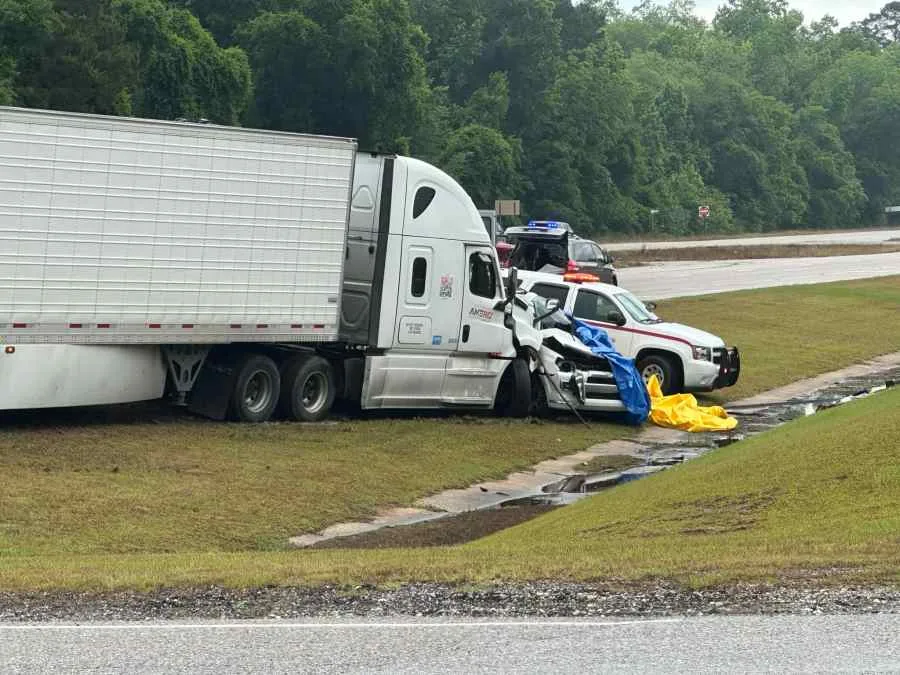
Industrial Truck Accident near Port of Houston
Harris County: #1 for Truck Fatalities in Texas

Houston-Specific Legal Insight: Texas HB 19 & Bifurcation

In Houston courts, trucking companies now frequently use Texas Civil Practice & Remedies Code §72.051 (HB 19) to "bifurcate" trials. This means they attempt to hide their history of safety violations from the jury during the first phase of the trial. Our truck accident legal analysis tool specializes in the "Negligent Maintenance" exception—if we prove the truck was mechanically unsound (brakes, tires, lighting).

  • TX Transp. Code §725.021: Loose material spillage focus.
  • TX Transp. Code §522.072: Employer responsibility for disqualified drivers.

Fatal Truck Accidents: Justice for Houston Families

When a commercial wreck turns fatal, Texas law provides two separate legal avenues under the Wrongful Death Act and the Survival Statute, each addressing different types of recovery.

The Wrongful Death Claim

Governed by Texas Civil Practice & Remedies Code Chapter 71, this action belongs to the survivors (spouse, children, and parents). It compensates you for the hole left in your life.

  • Pecuniary Loss: Loss of the deceased's future earning capacity and financial support.
  • Loss of Consortium: Compensation for the loss of love, companionship, and comfort.
  • Mental Anguish: Emotional pain, torment, and suffering experienced by the family.
  • Loss of Inheritance: The value the deceased would have likely added to an estate.

The Survival Action

Under Section 71.021, the deceased’s personal injury claim "survives" their death. This action belongs to the estate and covers what the victim suffered before passing.

  • Conscious Pain & Suffering: Damages for the physical and mental pain felt between injury and death.
  • Medical Expenses: All ER, ICU, and surgical costs incurred prior to the passing.
  • Funeral & Burial Costs: Direct reimbursement for the final arrangements.
  • Property Damage: Replacement value of the vehicle and personal items lost in the wreck.

Punitive (Exemplary) Damages in Gross Negligence Cases

In Houston, if a trucking company’s conduct was "egregious"—such as allowing a driver with multiple DUIs behind the wheel or ignoring out-of-service brake orders, Punitive Damages may be available. These damages are intended to punish particularly reckless conduct and deter similar behavior. Under Chapter 41 of the Texas Civil Practice & Remedies Code, these awards can significantly increase the total recovery.

Coverage Across North, South, East, and West Houston

Trucking companies don't just stay in the city. Use our legal assistant to aggressively pursue cases in Houston's fastest-growing suburbs where commercial traffic is at an all-time high.

Sugar Land & Fort Bend County

In May 2025, U.S. 59 (Southwest Freeway) near First Colony Blvd saw a devastating T-bone truck collision that tragically resulted in a fatality. This corridor is notorious for early-morning accidents as commuters from Sugar Land and Richmond mix with heavy commercial rigs. Accidents frequently occur at the Highway 6 and US 59 interchange, a known "hotspot" for multi-vehicle pileups.

The Woodlands, Conroe & Spring

The I-45 North (North Freeway) stretch through Montgomery County is a high-speed "conveyor belt" for long-haul trucks heading to Dallas. With major construction zones ongoing through 2025, narrow lanes near Rayford Road have led to a 15% increase in "squeeze play" accidents where trucks fail to see passenger cars during lane changes.

Baytown & East Freeway (I-10 East)

Baytown is the gateway to Houston's industrial heart. Recent 2025 data highlights SH-146 as a critical danger zone, particularly the 8500 block where fiery FedEx and concrete mixer collisions have recently occurred. If you were hit near the Garth Road or Thompson Road exits, your situation may involve complex industrial cargo regulations.

Pasadena & Highway 225

Pasadena experienced over 6,900 accidents in the most recent reporting period. The "La Porte Freeway" (Hwy 225) is dominated by heavy chemical tankers. This area frequently sees ‘lost load’ accidents near Red Bluff Road and Beltway 8, where unbalanced industrial freight causes rollover accidents that crush surrounding passenger vehicles.

High-Risk Intersection (2026) Primary Hazard Nearby Landmark
Greenspoint Dr @ N Sam Houston Pkwy Pedestrian & Big Rig Conflict North Belt Corridor
I-10 East @ Waco St High-Speed Rear-End Wrecks Houston East End
Bissonnet St @ Beltway 8 Intersection Weaving Southwest Houston
Highway 6 @ Westheimer Signal Timing Failures West Houston / Mission Bend